

Image from Web
What was the first car in Italy? Answer dates back to January 2, 1893, when a Peugeot Type 3 arrived in Piovene Rocchette, near Vicenza. The car was purchased by textile entrepreneur Gaetano Rossi and is widely recognized by the National Automobile Museum of Turin as the first automobile sold and driven in Italy.
The story of the first car in Italy is closely connected to the origins of Peugeot, the development of the internal combustion engine and the rise of modern mobility in Europe. It is also the story of Gaetano Rossi, an Italian industrialist who understood the practical potential of the automobile at a time when motor vehicles were still an extraordinary technological novelty.
Today, the historic Peugeot Type 3 is preserved at the National Automobile Museum of Turin, where it represents one of the most fascinating milestones in the history of Italian motoring.
The origins of Peugeot: from textiles to automobiles
The history of Peugeot began long before the first automobile was built.
Its industrial origins can be traced to the 18th century, when Jean-Pierre Peugeot, born in 1734, began his activities in the textile industry. Over time, the Peugeot family diversified its activities and moved into metalworking.

In 1810, members of the family transformed a mill into an industrial facility dedicated to metal production. Peugeot began manufacturing tools, blades, springs and other steel products, establishing a reputation for high-quality manufacturing.
The company later entered the bicycle industry, an important step toward the development of motor vehicles.
Arnaud Peugeot and the birth of automobile
The key figure in Peugeot’s transition to automobiles was Armand Peugeot, born in 1849.
After visiting England in 1871, Armand Peugeot became interested in bicycles and convinced his family to invest in their production. Peugeot eventually became one of Europe’s leading bicycle manufacturers.
But Armand Peugeot was already looking toward the future.
At the end of the 19th century, engineers and entrepreneurs across Europe were working on a major challenge: developing a compact engine capable of powering a vehicle for personal transportation.
The Paugeot Type 1: Peugeot’s first motor vehicle
At the Paris World’s Fair in 1889, Armand Peugeot presented a three-wheeled vehicle equipped with a steam engine, known as the Peugeot Type 1.
Steam propulsion, however, had significant limitations when compared with the emerging internal combustion engine.
During the same period, German engineers Gottlieb Daimler and Wilhelm Maybach were developing compact internal combustion engines that attracted the attention of Armand Peugeot.
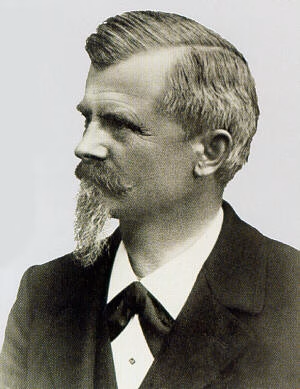
This technology offered significant advantages for the development of a practical automobile.Armand Peugeot therefore decided to explore the use of Daimler engines.
Peugeot, Émile Levassor and Daimler engines
To develop his automotive project, Armand Peugeot worked with French entrepreneur Émile Levassor, who was also interested in the emerging engine industry.
Peugeot and Levassor established an agreement to manufacture engines under Daimler license. A total of 100 engines were planned, with 70 intended for Levassor’s activities and 30 for Peugeot vehicles.
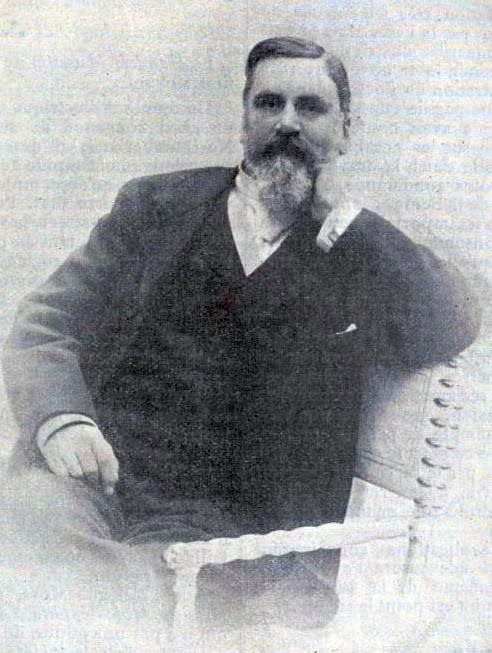
This cooperation played an important role in the transition from experimental motor vehicles to the early automobile.
The Peugeot Type 2
In 1891, Armand Peugeot built a four-wheeled vehicle equipped with a Daimler engine.
Known as the Peugeot Type 2, it represented one of the company’s first serious steps into automobile manufacturing.
Soon afterward, Peugeot developed the Type 3, the model that would eventually become famous in Italy.
The Peugeot Type 3: the car that came to Italy in 1893
The Peugeot Type 3 was a four-wheeled automobile powered by a Daimler engine. It was this model that would become the first car in Italy.

The vehicle purchased by Gaetano Rossi is particularly significant because it demonstrates how quickly the new technology was spreading beyond France and Germany.
At a time when automobiles were still rare and expensive, Rossi recognized their potential as a practical means of transportation.
Who Was Gaetano Rossi?
Gaetano Rossi was an entrepreneur from the province of Vicenza and a member of the prominent Rossi industrial family.
The Rossi family played an important role in the growth of the Italian textile industry, particularly in the town of Schio.
Founded in 1815, the Rossi Textile Mills expanded over the years to become one of Italy’s leading wool manufacturers, eventually operating under the name Lanerossi.

Gaetano Rossi was involved in the management of the company’s operations in Piovene Rocchette.
His daily work required him to travel between Schio and Piovene Rocchette, a journey of approximately 15 kilometers each way.
At the time, these trips were normally made by horse-drawn carriage. The arrival of the automobile offered Rossi a completely new solution.
Why Did Gaetano Rossi Buy an Automobile?
Rossi was deeply interested in technological innovation and, therefore, quickly recognized the potential advantages of motorized transportation. At the time, early automobiles could reach speeds of approximately 30–35 km/h, which was remarkably fast compared with traditional means of transportation.
For this reason, Rossi decided to explore the possibility of purchasing a car. Initially, he contacted an intermediary in Milan, who subsequently put him in touch with Daimler.

However, demand for engines and automobiles was already exceeding production capacity. Rossi was informed that he might have to wait at least six months for delivery.
Instead, he eventually contacted Peugeot. The French company offered him a Peugeot Type 3 equipped with a Daimler engine.
January 2, 1893: The First Car in Italy
On January 2, 1893, the Peugeot Type 3 arrived in Piovene Rocchette.
This date is considered a key milestone in the history of the automobile in Italy.
Gaetano Rossi began using the car for his journeys between Schio and Piovene Rocchette. The vehicle immediately attracted attention because self-propelled automobiles were still an extraordinary sight on Italian roads.
According to the historical reconstruction preserved by the National Automobile Museum of Turin, the vehicle associated with Rossi is identified with chassis number 25 and is recognized as the first automobile sold and driven in Italy.
How Much Did the First Car in Italy Cost?
Buying an automobile in 1893 was, therefore, a major financial investment.
At the time, the Peugeot Type 3 purchased by Gaetano Rossi represented a considerable expense. In today’s terms, its value is estimated at approximately €200,000. Moreover, around 20% of the purchase price was reportedly allocated to spare parts.
This may seem surprising today; however, spare parts were essential during the early days of motoring. Indeed, specialized repair shops were extremely rare, while automobile technology was still in its infancy and replacement components were difficult to obtain.
As a result, early car owners had to be prepared to carry out repairs themselves, often with very limited access to external assistance.
What Happened to the First Car in Italy?
The story of the first car in Italy did not end with Gaetano Rossi.
In 1896, Rossi purchased a newer Peugeot Type 9 and sold his Type 3 to his friend Guido Lazzari.
Lazzari continued using the automobile for several years before eventually replacing it with a more modern vehicle.
Unlike many early automobiles, however, the historic Peugeot was not completely discarded. Lazzari kept it.
During the First World War, the car experienced an unusual chapter in its history.
The vehicle was partially dismantled, and some of its components were reportedly reused as spare parts for aircraft maintenance.
Despite this, Lazzari continued to preserve the remaining vehicle.
From Guido Lazzari to the National Automobile Museum of Turin
Guido Lazzari died in 1956.
After his death, the Peugeot Type 3 was eventually sold to an antiques dealer in Udine, who began researching its identity.
Following an initial restoration, the car was identified as a 1894 Peugeot Type 3.
The vehicle later came to the attention of Carlo Biscaretti di Ruffia, one of the key figures behind the creation of the National Automobile Museum of Turin.
The Peugeot was exchanged for a FIAT 1100, and in 1957 the Type 3 entered the museum’s collection.
At the time, however, its true history had not yet been fully established.
The 1998 Discovery That Changed the Car’s History
A major breakthrough came in 1998, when researchers began examining Peugeot’s historical archives and production records. As a result, they uncovered documents showing that a vehicle bearing the relevant chassis identification had been sold in Italy in 1893.
At that point, researchers realized that the automobile they were looking for was already part of the collection of the National Automobile Museum of Turin. For decades, however, the vehicle had been mistakenly associated with the wrong production year.
Further investigation subsequently helped reconstruct its history and confirm its connection with Gaetano Rossi’s 1893 purchase. Finally, the automobile was restored according to its historically documented configuration, allowing its original story to be properly recognized.
Where Is the First Car in Italy Today?
The 1893 Peugeot Type 3 is preserved today at the National Automobile Museum of Turin, also known as Museo Nazionale dell’Automobile (MAUTO).

The museum’s collection makes it possible to see one of the earliest automobiles connected with the development of motoring in Italy.
For anyone interested in car history, vintage automobiles and the origins of Italian motoring, the Peugeot Type 3 represents an especially important historical artifact.
Why Is the Peugeot Type 3 Important?
The history of the first automobile in Italy is not simply the story of an old car.
It is the story of a time when the automobile was evolving from a technological curiosity into a new means of transportation.
The Peugeot Type 3 that arrived in Italy in 1893 represents this transformation. On one side was Armand Peugeot, the entrepreneur who recognized the potential of internal combustion engines; on the other was Gaetano Rossi, who understood the practical advantages that this new technology could offer in his everyday business activities.
More than a century later, that same automobile continues to tell the story of the beginning of a transformation that would profoundly change society, industry, and the way people travel.
The first car in Italy, which arrived in 1893 as Gaetano Rossi’s Peugeot Type 3, is therefore much more than a historic vehicle: it is one of the symbols of the birth of Italian motoring.